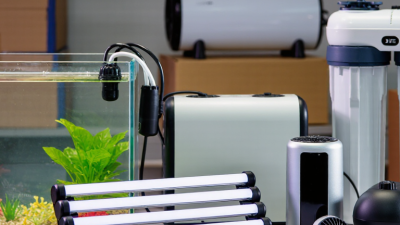
The global aquarium market is becoming more specialized, demanding safer equipment, clearer specifications, and dependable export support. For buyers comparing China’s leading suppliers, product variety alone is not enough. Fish Aquarium Products must perform reliably beside living animals, in homes, hotels, classrooms, and retail displays.
Industry data confirms strong and diverse demand. The American Pet Products Association’s 2023–2024 National Pet Owners Survey reported approximately 11.1 million U.S. households keeping freshwater fish and 2.5 million keeping saltwater fish. Grand View Research also identifies ornamental fish and aquarium-related products as a growing global market, although estimates vary because companies define the category differently. This difference matters. A supplier’s market claim should be checked against product records, testing evidence, and shipment experience.
Look closely.
A capable Chinese supplier should provide aquarium filters, air pumps, LED lighting, heaters, tanks, decorations, and maintenance tools with consistent specifications. Buyers should also examine electrical certifications, material safety, packaging strength, spare-part availability, and after-sales communication. CITES guidance and national import rules remain important when live species or wildlife-derived materials are involved; responsible product sourcing must respect these requirements.
Practical experience often reveals more than a polished catalog. Ask for sample units. Test a filter’s noise level beside a bedroom tank. Inspect silicone seams after transport. Confirm whether replacement impellers are actually available. No supplier is perfect, and low-cost purchasing can create hidden maintenance expenses. This guide evaluates China’s best Fish Aquarium Products suppliers through product quality, manufacturing capability, compliance awareness, customization, and global buyer support.
A reliable China-based fish aquarium supplier starts with verifiable production evidence. APPA’s 2023–2024 National Pet Owners Survey reports 6.5 million U.S. freshwater-fish households. That demand requires consistent quality, not attractive catalogs alone. Ask for factory videos, material specifications, inspection records, and batch traceability. Small details matter. A filter should run quietly, while seals must remain flexible after repeated water exposure. For lighting and pumps, request test reports aligned with IEC 60335-2-55. Suppliers should also explain voltage options, plug standards, packaging strength, and spare-part availability.
ISO’s 2023 Survey recorded 1,265,216 valid ISO 9001 certificates worldwide. Certification is useful, but it does not replace an independent factory audit. Verify the certificate holder, production address, and audit scope. Request a pre-shipment inspection with measurable limits for leakage, noise, power consumption, and carton damage. A dependable supplier welcomes these checks and keeps corrective-action records. I have learned that a polished sample can hide uneven production. One imperfect batch deserves investigation, not excuses. Buyers should compare three production samples, review saltwater and freshwater use separately, and confirm product-contact materials. Clear communication also matters when customs documents, labeling, or delivery schedules change. Reliability is visible in repeated performance, honest limitations, and evidence that survives careful questioning.
China Best Fish Aquarium Products Supplier for Global Buyers
Core Aquarium Product Categories for International Buyers
International buyers usually source a complete aquarium system, not one isolated product. Grand View Research estimated the global aquarium market at about USD 6.5 billion in 2023, with continued growth expected through 2030. This demand supports several core categories: glass or acrylic tanks, LED lighting, filters, air pumps, heaters, water conditioners, fish food, and aquascaping materials. Each category serves a different operating need. A clear tank improves viewing, while stable filtration protects water quality and fish health. Energy-efficient lighting can also reduce long-term operating costs.
From practical sourcing experience, filtration and heating deserve extra attention. Buyers should compare flow rates, noise levels, power consumption, replacement parts, and voltage options. The United Nations Environment Programme has highlighted growing concern about plastic waste, so durable packaging and recyclable materials deserve inspection. Supplier evaluation should include factory audits, product test reports, material declarations, and carton drop-test records. Low prices can hide weak seals or fragile cables. That mistake becomes expensive after shipping.
Tips: Request samples before bulk purchasing. Check plug standards and language requirements. Confirm aquarium-safe materials. Test filters for seven days. Small details matter. Review the data twice. Even experienced buyers occasionally overlook spare-part availability, which can delay customer support and damage trust.
Core Aquarium Product Categories for International Buyers
The chart presents indicative wholesale price ranges per unit for commonly traded aquarium product categories. Actual prices vary according to materials, capacity, electrical specifications, packaging, certification, order quantity, and destination market.
China’s aquarium suppliers serve global buyers with glass tanks, filtration systems, lighting, decorations, and custom equipment. Experienced suppliers usually control quality through documented production steps. They inspect glass thickness, silicone bonding, electrical parts, water flow, and packaging strength. A tank may look perfect, yet a weak corner seal can cause problems after weeks of use.
Quality control starts with material verification. Suppliers can check glass clarity, metal composition, plastic safety, and component dimensions before assembly. During production, workers use measured curing times and water-leak tests. Responsible factories also keep batch records, inspection photos, and packing reports. These details help buyers trace defects instead of relying on promises.
Testing matters.
Customization requires more than changing colors. Buyers may request special tank sizes, cabinet openings, filter capacity, cable routes, lighting temperatures, or private packaging. Professional suppliers confirm drawings, tolerances, sample approvals, and shipping requirements before mass production. A practical supplier also explains what cannot be changed safely. That honesty is valuable.
The process is not always flawless. A sample can pass inspection but reveal a minor fitting mismatch during installation. Different markets may also require different plugs, labels, manuals, or electrical certifications. Clear communication reduces these risks, but it does not remove them. Buyers should review samples carefully, test key functions, and record agreed specifications. Suppliers that welcome corrections often build stronger long-term reliability than those seeking quick approval.
For global buyers, a reliable China-based aquarium supplier must treat export compliance as a daily process, not a sales phrase. Products should match the destination market’s safety, labeling, and documentation rules. Electrical filters, pumps, and lighting may require CE, RoHS, UKCA, or other applicable approvals. Requirements vary by product and country. Always request recent test reports from accredited laboratories. A certificate alone is not enough.
Packaging also affects export quality. Glass tanks need reinforced corners, shock-resistant foam, and clear handling labels. Moisture protection matters for electronic parts and metal accessories. Suppliers should provide commercial invoices, packing lists, certificates of origin, and accurate HS codes. Incorrect descriptions can delay customs clearance. I have seen small documentation errors create larger costs than expected. That lesson deserves attention.
Tips: Confirm the destination standards before production. Ask for carton dimensions and gross weight early. Compare sea, rail, air, and courier options against delivery urgency. Use clear Incoterms, such as FOB or DDP, only after understanding insurance, duties, and local responsibilities. Leave buffer time for inspections and port congestion. Shipping plans are never perfect, so keep a practical backup schedule.
| Product Category | Typical Export Specifications | Relevant Standards and Certifications | Export Documentation | Global Shipping Considerations | Buyer Verification Focus |
|---|---|---|---|---|---|
| Glass Aquariums |
Float or tempered glass construction Common volume range: 20–500 L Silicone-sealed panels with protective corners |
EN 14749
ISO 9001 process control Glass thickness and safety requirements should be confirmed by design and destination market. |
Commercial invoice Packing list Certificate of origin, when required Product specification sheet |
Use reinforced export cartons, foam, corner protection and moisture-resistant pallets. Sea freight is generally more suitable than air freight because of weight and breakage risk. |
Water-leak test Panel thickness Edge finishing Drop-test and palletization records |
| Aquarium LED Lighting |
Typical input: 100–240 V AC, 50/60 Hz LED color temperature commonly listed in kelvin (K) Dimmable and programmable versions available |
CE
RoHS
EMC/LVD assessment
FCC, where applicable CE marking applies to relevant EU requirements; it is not a universal quality mark. |
EU Declaration of Conformity, where applicable Test reports User manual and safety labels Commercial invoice and packing list |
Confirm plug type, voltage, frequency and customs classification before shipment. Protect LED housings and power supplies from impact and moisture. |
Electrical safety test EMC test RoHS material declaration IP rating evidence, if an IP claim is made |
| Water Pumps |
Typical power range: 5–100 W for household aquariums Flow rate commonly specified in L/h AC and low-voltage DC models |
CE
RoHS
IEC 60335-1
IEC 60335-2-41 Exact requirements depend on product design and destination market. |
Declaration of conformity, where required Electrical test report Rated flow and head-performance sheet Installation and safety instructions |
Drain residual water before packing. Use molded inserts or separated compartments to prevent impeller and housing damage. Confirm whether the pump contains an integrated adapter. |
Flow-rate test Leakage and insulation test Noise measurement method Continuous-operation test |
| External Canister Filters |
Typical aquarium ratings: approximately 100–1,000 L, depending on model Multi-stage mechanical, biological and chemical filtration |
CE for electrical versions
RoHS
IEC 60335-2-41, where applicable Published aquarium capacity should be treated as a design indication, not a guaranteed universal rating. |
Product specification sheet Spare-parts list Electrical safety documentation, where applicable Commercial invoice and packing list |
Ship completely dry with hoses and accessories secured separately. Larger cartons may increase dimensional-weight charges in air freight. Sea freight is commonly preferred for bulk orders. |
Seal and pressure test Flow test with media installed Hose and connector compatibility Replacement-part availability |
| Internal Filters and Air Pumps |
Internal filters generally use foam or cartridge media. Air pumps are commonly rated by output in L/min and electrical power in W. |
CE
RoHS
EMC Low-voltage models may require different documentation from mains-powered models. |
Electrical test report User instructions Spare diaphragm or filter-media information Export commercial documents |
Use anti-vibration inserts for air pumps. Keep ceramic shafts, suction cups and small fittings in sealed accessory bags. Avoid loose components inside motor housings. |
Noise level Air-output or flow consistency Insulation resistance Operating-temperature test |
| Aquarium Heaters |
Common power range: 25–500 W Adjustable temperature control Glass or polymer protective housing, depending on design |
CE
RoHS
IEC 60335-2-55 Thermal-protection features and applicable electrical standards should be verified for the destination. |
Temperature-accuracy report Electrical safety test User manual with immersion instructions Declaration of conformity, where applicable |
Pack with rigid protective sleeves and shock-absorbing material. Do not ship energized or installed in water. Verify destination voltage and plug configuration. |
Over-temperature protection Dry-run safety, if claimed Water-ingress protection Calibration and thermostat accuracy |
| Aquarium Air and Water Tubing |
Common inner diameters include approximately 4–6 mm for air tubing. PVC, silicone and other polymer formulations are used according to application. |
REACH, EU market
RoHS, if used in an electrical assembly Food-contact or potable-water claims require separate applicable evidence and should not be assumed. |
Material specification REACH/SVHC declaration, where applicable Batch or lot information Packing list |
Lightweight and suitable for carton or roll packing. Prevent kinks, compression and exposure to excessive heat during storage and transit. |
Inner and outer diameter tolerance Flexibility and aging Odor and material consistency Compatibility with connectors |
| Filter Media |
Ceramic, sintered glass, foam, polyester or activated carbon media Sold by piece, bag weight or volume |
REACH, EU market
Chemical composition disclosure Claims concerning biological performance should be supported by test data rather than marketing language alone. |
Material safety information, where relevant Product data sheet Batch identification Commercial invoice and packing list |
Use dust-resistant inner bags and moisture-resistant outer cartons. Activated carbon and fine media should be sealed to prevent contamination and leakage. |
Particle-size distribution Dust level Adsorption or surface-area data, when claimed Packaging integrity |
| Aquarium Decorations |
Ceramic, resin, stone or plastic ornaments Product dimensions and net weight should be stated for each SKU |
REACH, EU market
Heavy-metal testing, where relevant Aquatic-safety claims require suitable material and leachability evidence. |
Material declaration Colorant or coating information Product dimensions and weight Packing list and invoice |
Use individual wrapping, dividers and edge protection. Heavy stone products may require reinforced cartons and pallet loading limits. |
Sharp-edge inspection Coating adhesion Water-soak or leachability testing, where claimed Color stability |
| Fish Nets and Hand Tools |
Nylon or polyester mesh with plastic or metal handles Mesh size and handle length should be specified in millimeters |
REACH, EU market
Material safety documentation Electrical certifications are normally not applicable unless the product includes powered components. |
Material specification Product dimensions Packing list Commercial invoice |
Nesting can reduce carton volume. Protect metal parts from corrosion and prevent handles from puncturing outer cartons. |
Mesh seam strength Handle-to-net attachment Corrosion resistance Surface-finish inspection |
| Packaging and Customs |
Common export packing: master cartons, pallets, foam inserts and moisture barriers Container loading should account for gross weight, carton dimensions and fragility. |
ISPM 15 for regulated wood packaging UN 38.3 for lithium batteries, if included IEC 60529 for IP claims |
Commercial invoice Packing list Bill of lading or air waybill Certificate of origin, when required Test reports and declarations for regulated products |
Indicative HS headings include 8413 for pumps, 9405 for lighting equipment, 3926 for certain plastic articles and 7013 for certain glassware; final classification must be confirmed with the customs authority or broker. Incoterms should be agreed in writing. |
Carton marks Gross/net weight Country-of-origin marking Moisture, shock and stacking protection Destination-specific import requirements |
| International Shipping Planning |
Sea freight: suitable for larger or heavier shipments Air freight: faster but usually more expensive by chargeable weight Courier: suitable mainly for samples or small parcels |
Destination dependent Electrical, chemical, battery and wood-packaging requirements vary by market and product configuration. |
Confirm HS code, Incoterm, consignee details, importer of record, customs value and required certificates before dispatch. |
Compare actual weight with volumetric weight. Allow time for customs clearance, port handling and final-mile delivery. Insure fragile glass and high-value electrical goods where commercially appropriate. |
Pre-shipment inspection Carton drop test Container loading photos Seal number and shipping-document consistency |
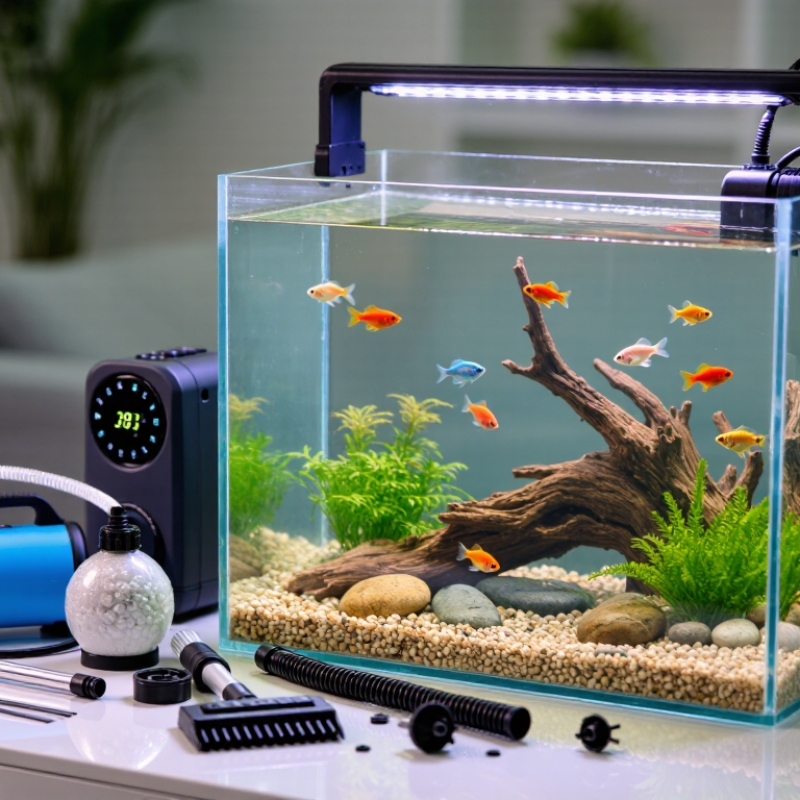
China Best Fish Aquarium Products Supplier for Global Buyers
How to Evaluate and Select the Right Supplier for Your Market
Choosing an aquarium products supplier requires more than comparing online prices. Your market may need glass tanks, filters, lighting, pumps, or decorative accessories. Each item demands different quality checks. Ask for material specifications, production photos, sample units, and test reports before discussing large orders. Clear evidence matters more than polished sales language.
Visit the factory when possible, or arrange a live video inspection. Check storage conditions, assembly areas, packaging strength, and quality control records. A reliable supplier should explain its minimum order quantity, lead time, payment terms, and replacement policy. Request carton dimensions and product weights early. These details affect freight costs and warehouse planning. Also verify whether the supplier can provide accurate customs documents for your destination.
Test a small shipment before scaling. Fill tanks with water for several days and inspect seals, edges, and stability. Run pumps continuously to notice unusual noise or heat. Examine lighting cables and protective packaging after transport. I have seen attractive samples fail because cartons were too thin. A lower price can hide higher damage rates. That lesson is easy to forget. Keep written records of every promise, including delivery dates and inspection standards. Communication quality also deserves attention. Slow replies may become serious problems after payment. Supplier selection is not perfect science, and your first evaluation may miss something. Leave room for correction.
Copyright © 2021 Payless Pet Products - All Rights Reserved.