China Top Fish Aquarium Products Wholesale Suppliers
China has become a major sourcing destination for Fish Aquarium Products, serving retailers, distributors, and aquatic hobby brands worldwide. Its manufacturing base includes aquarium tanks, LED lighting, filtration systems, air pumps, heaters, ornaments, and maintenance tools. However, product variety alone does not prove supplier quality.
This introduction explores how to identify reliable wholesale suppliers in China. It considers factory experience, production capacity, material safety, testing records, packaging standards, and export performance. Buyers should request clear product specifications, recent factory images, sample orders, and verifiable business documents. Certifications may support confidence, but they should be checked for authenticity and relevance to the destination market. Compliance with electrical, environmental, labeling, and consumer safety rules remains essential.
Details matter. A well-sealed filter should run quietly during testing. Aquarium glass should arrive without chips, cloudy edges, or uneven silicone lines. Boxes need strong corner protection, especially during long-distance shipping. Supplier communication also deserves careful attention. Delayed answers can become costly after a large order is placed.
No supplier is perfect. That matters.
Price comparisons may overlook warranty support, spare parts, or inconsistent batches. Even experienced buyers can misjudge a factory after one successful sample. A balanced review should combine practical inspection, documented evidence, customer feedback, and direct communication. This guide aims to offer a realistic framework for comparing China’s leading wholesale suppliers, while recognizing that performance can vary by product category, order size, and market requirements. Ethical sourcing, transparent transactions, and responsible packaging should remain part of every purchasing decision.
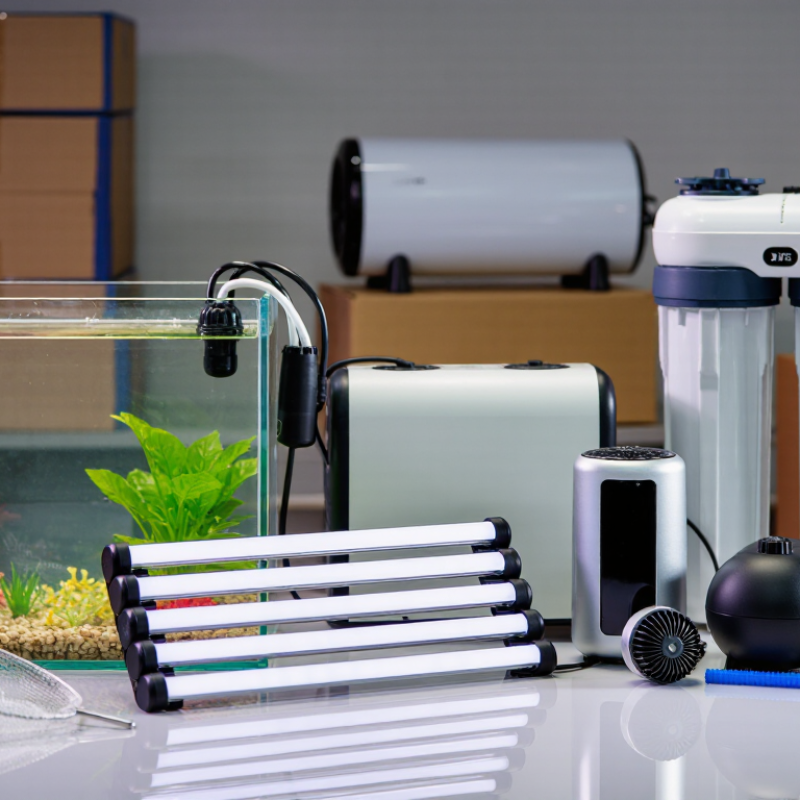
China’s Aquarium Wholesale Ecosystem in FAO SOFIA 2024’s 130.9M-Tonne Context
China’s aquarium wholesale ecosystem sits within a much larger aquatic economy. FAO SOFIA 2024 reports 130.9 million tonnes of aquatic animal production globally. Ornamental fish represent only a small share, but this figure explains the sector’s supply depth. China’s manufacturing clusters support tanks, filters, lighting, nets, air pumps, and water testing tools.
A reliable supplier should show more than a polished catalogue. Visit the warehouse when possible. Check carton strength, cable protection, spare parts, and batch consistency. A filter may look efficient online, yet its noise level can disappoint in a quiet living room. Ask for flow-rate data under realistic water resistance. Request product samples before placing large wholesale orders.
Packaging also deserves practical attention. Glass tanks need corner protection, foam separation, and clear inspection procedures. Small accessories should arrive sorted, labelled, and easy to count. For aquatic livestock, buyers must verify welfare standards, transport rules, and local import requirements independently. Those details are not optional.
The 130.9-million-tonne context can create false confidence. A huge global market does not guarantee every supplier’s reliability. Some specifications remain vague. Others change between production batches. Buyers should record test results, delivery damage, response times, and warranty handling. That evidence builds a more dependable sourcing decision than low prices alone.
China Top Fish Aquarium Products Wholesale Suppliers - China’s Aquarium Wholesale Ecosystem in FAO SOFIA 2024’s 130.9M-Tonne Context
Data-oriented overview of wholesale aquarium product categories, technical specifications, compliance considerations, and the FAO SOFIA 2024 global fisheries and aquaculture context. No company or brand data is included.
| Wholesale Product Category | Typical Aquarium Application | Common Wholesale Specification | Key Material or Performance Dimension | Relevant Compliance or Safety Focus | FAO / Industry Context |
|---|---|---|---|---|---|
| Glass Aquariums | Freshwater, marine, planted, and ornamental fish displays | Rectangular tanks commonly specified by length × width × height; nominal capacities include 30 L, 60 L, 120 L, and 240 L | Float glass or low-iron glass; silicone-sealed joints; wall thickness selected according to tank height and water pressure | Leak testing, edge finishing, packaging protection, and safe handling of glass panels | Supports ornamental-fish retail and home-aquarium demand; not an FAO production category |
| Aquarium Filtration Systems | Mechanical, biological, and chemical filtration for home and commercial aquariums | Rated flow is commonly expressed in litres per hour; practical turnover is often specified around 4–6 aquarium volumes per hour, depending on livestock and filter type | Filter-media volume, pump head height, flow control, noise level, and continuous-duty motor design | Electrical safety, insulation, water resistance, plug compatibility, and operating instructions | Used to maintain water quality in systems holding ornamental aquatic animals |
| Air Pumps and Diffusers | Supplemental aeration and gas exchange in freshwater and marine systems | Output is typically stated in litres per minute; diffuser pore size and tubing diameter affect bubble distribution | Airflow stability, back-pressure tolerance, vibration control, and corrosion-resistant components | Electrical protection, low-voltage options, non-return valves, and safe placement above or below water level | Supports dissolved-oxygen management; oxygen demand varies with stocking density and water temperature |
| LED Aquarium Lighting | Fish display, aquatic plants, coral systems, and day–night simulation | Common specifications include wattage, colour temperature, luminous output, spectrum, timer, and IP water-resistance rating | Heat dissipation, light distribution, spectrum stability, dimming control, and service life | Electrical conformity, waterproofing limits, thermal protection, and correct installation distance | Plant and coral applications require more precise light specifications than basic fish-only displays |
| Water Pumps and Circulation Equipment | Internal circulation, sump return, protein-skimmer feed, and marine-system flow | Flow capacity is measured in litres per hour; performance should be evaluated at the stated head height rather than free-flow output alone | Impeller design, controllable speed, ceramic shaft options, energy consumption, and saltwater resistance | Electrical safety, dry-run protection, inlet guards, and compatibility with continuous operation | Equipment supports recirculating aquatic systems rather than capture or aquaculture production itself |
| Water Treatment and Test Products | Chlorine removal, pH management, biological support, and monitoring of aquarium water | Liquid treatments are commonly sold in millilitres; test kits may measure pH, ammonia, nitrite, nitrate, hardness, and alkalinity | Dosage accuracy, test-range resolution, reagent stability, and clearly stated treatment volume | Ingredient disclosure, hazard labelling, storage instructions, expiry dating, and local chemical regulations | Water-quality control is essential for ornamental aquatic-animal welfare and system stability |
| Fish Feed and Feeding Accessories | Routine feeding of ornamental fish, shrimp, marine fish, and juvenile specimens | Feed forms include flakes, pellets, granules, wafers, and frozen formats; pellet size is selected according to fish mouth size and life stage | Protein and lipid formulation, sinking or floating behaviour, particle size, moisture control, and packaging barrier | Feed-labelling rules, ingredient declaration, batch traceability, storage conditions, and contamination control | Feeds are linked to aquatic-animal husbandry, while FAO production statistics cover food and non-food aquatic production at global level |
| Heaters and Temperature Controllers | Temperature regulation for tropical freshwater and marine aquariums | Heating power is generally stated in watts; selection depends on water volume, room temperature, tank cover, and desired temperature difference | Thermostat accuracy, shatter-resistant casing, heating element durability, and over-temperature protection | Electrical safety, dry-run protection, immersion limits, and controller calibration | Temperature stability influences fish metabolism, feeding, disease risk, and dissolved-oxygen conditions |
| Decorations, Substrates, and Aquascaping Materials | Habitat structure, visual presentation, biological surfaces, and planted-tank layouts | Products include gravel, sand, ceramic media, resin ornaments, driftwood, and natural stone; grain size and pack weight are key wholesale fields | Inertness, colour stability, surface texture, density, sharp-edge control, and effect on water chemistry | Cleanability, non-toxic materials, absence of harmful coatings, and safe packaging against breakage | Used across ornamental-fish retail, aquascaping, public displays, and aquarium installation projects |
| Maintenance Tools and Replacement Parts | Water changes, algae removal, filter servicing, and routine aquarium maintenance | Typical items include siphons, nets, scrapers, brushes, tubing, valves, impellers, and replacement filter media | Replacement compatibility, corrosion resistance, hose diameter, mesh size, and tool ergonomics | Material safety, cleanability, spare-part identification, and packaging instructions | Recurring maintenance demand creates a consumables and replacement-parts segment for wholesalers |
| FAO SOFIA 2024 Reference: Global Aquatic-Animal Production | Macro context for the aquatic-products ecosystem | 185.4 million tonnes in 2022, including approximately 91.0 million tonnes from capture fisheries and 94.4 million tonnes from aquaculture | FAO reports aquatic animals separately from algae; the figures refer to global production, not aquarium-product sales | Use the source year and measurement scope when comparing market statistics | FAO SOFIA 2024 |
| FAO SOFIA 2024 Reference: Algae Production | Broader aquatic-production context, separate from ornamental aquarium goods | Approximately 36.4 million tonnes of algae were produced globally in 2022 | Algae are reported separately from aquatic animals and should not be added to aquarium-equipment market totals without a defined methodology | Data interpretation should preserve the distinction between aquatic animals, algae, capture, and aquaculture | FAO SOFIA 2024 |
| Title Context: 130.9 Million Tonnes | Editorial reference retained from the requested title | The 130.9-million-tonne figure should be cited with its exact source definition, year, geography, and product scope before publication | It should not be presented as global aquarium-product sales or automatically equated with FAO’s 2022 global aquatic-animal production figure | Source verification is required to avoid mixing different statistical scopes | Context figure supplied in the brief |
Source note: Global production figures are based on the Food and Agriculture Organization of the United Nations, The State of World Fisheries and Aquaculture 2024 (SOFIA 2024), using 2022 production data. Product specifications are standard wholesale specification dimensions and should be confirmed against the applicable technical standard, destination-market regulation, and shipment configuration.
Related Posts
-
The Future of Home Aquariums in Sustainable Aquaculture
-
How to Choose the Best Fish Pet Supply for Your Aquatic Companions
-
2026 Best Fish Aquarium Products You Need to Know?
-
What is the Ultimate Guide to the Best Fish Aquarium Products for Global Buyers
-
Navigating the Future of Aquarium Stands in 2025 with Essential Setup Tips
-
Best Aquarium Light Options for Global Buyers in 2026?