How to Choose PU Leather Material for Global Sourcing?
Choosing PU Leather Material for global sourcing is not simply a matter of comparing prices. It requires evidence, testing, and practical judgment. Grand View Research reports continued growth in the global synthetic leather market, driven by footwear, furniture, automotive interiors, and consumer goods. This growth creates more suppliers, but also more inconsistent specifications. A roll may look smooth under showroom lights, yet crack after repeated folding or develop a strong odor inside a closed vehicle.
A reliable sourcing process should examine polyurethane type, backing fabric, thickness, abrasion resistance, hydrolysis performance, colorfastness, and volatile organic compounds. The Higg Materials Sustainability Index also shows why material decisions should consider manufacturing impacts, not appearance alone. Request current laboratory reports, production samples, and factory quality records. Check whether testing follows recognized methods, such as ISO or ASTM standards. Supplier claims are useful, but independent verification is stronger.
Materials scientist Michael Braungart, co-founder of the Cradle to Cradle Products Innovation Institute, states, “Waste equals food.” This principle encourages buyers to question durability, chemical safety, and end-of-life options before placing large orders. PU Leather Material is not automatically sustainable, recyclable, or low-impact. Its performance depends on the polymer system, coating structure, additives, and manufacturing controls. No checklist is flawless. Even experienced buyers can miss a weak adhesive layer or an unreliable test sample. A careful sourcing strategy therefore combines technical data, factory visits, small pilot orders, and honest review after use. The best supplier is not always the cheapest. It is the one that can repeatedly deliver safe, consistent, and documented material for the intended market.
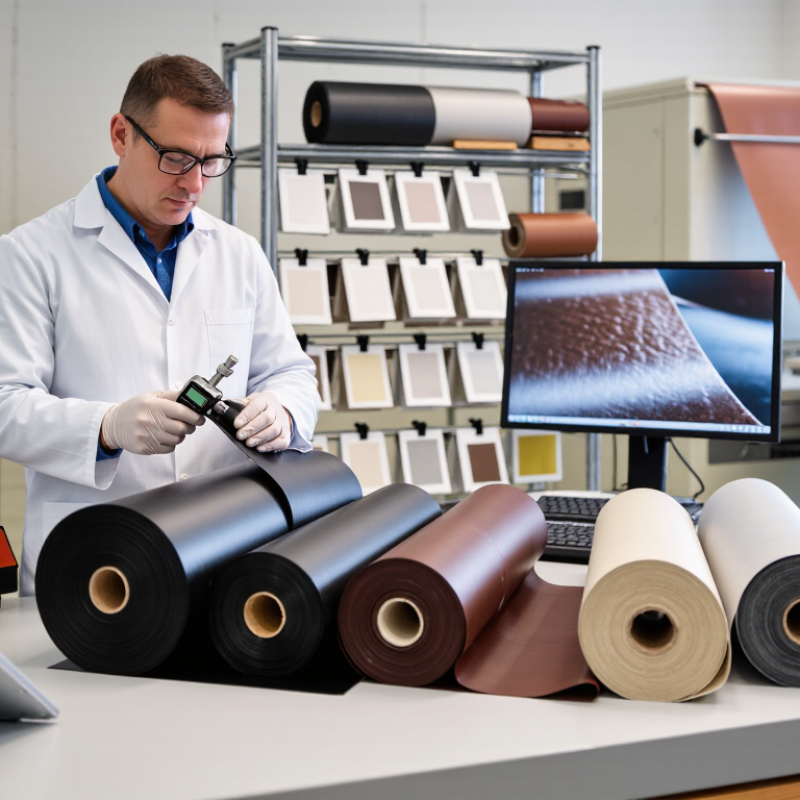
Define PU Leather Types: Solvent-Based, Water-Based, and Bio-Based Options
Choosing PU leather for global sourcing starts with its coating chemistry, not its color card. Solvent-based PU offers strong adhesion, fine grain definition, and reliable abrasion resistance. However, solvents can increase VOC management needs during production. Water-based PU usually reduces solvent exposure and supports a softer hand feel. It may need tighter drying control, especially in humid factories. Bio-based PU replaces part of the fossil feedstock with plant-derived content. It is not automatically biodegradable.
The distinction matters. Textile Exchange’s Materials Market Report 2024 reported global fiber production at 124 million tonnes in 2023, showing the scale of material decisions across supply chains. Grand View Research also estimates continued growth in synthetic leather demand through 2030. These figures suggest larger purchasing pressure, but they do not prove that every “eco” coating performs well. Test the material yourself.
Ask suppliers for bio-based carbon content, verified through methods such as ASTM D6866, rather than accepting vague percentages. Request VOC data, restricted-substance declarations, hydrolysis resistance, flex cracking, peel strength, and colorfastness results. Solvent-based samples may look sharper after embossing. Water-based samples can feel more natural, but weak curing may cause surface tack. I once favored the softest swatch; it failed after repeated folding. That was a useful mistake. Compare samples after heat, humidity, abrasion, and storage tests. A lower-impact formulation is valuable only when durability prevents early replacement.
Compare Core Specifications: 0.8–1.5 mm Thickness and 20,000+ Abrasion Cycles
How to Choose PU Leather Material for Global Sourcing?
When comparing PU leather, thickness is a practical starting point. Materials from 0.8 to 1.5 mm cover many furniture, bags, and interior applications. A 0.8 mm sheet feels flexible and light, but it may show backing texture around tight seams. A 1.2 mm option usually offers better body and handling. The thickest choice is not always the best choice. It can resist shaping and increase material waste.
Abrasion performance needs equal attention. Specify at least 20,000 abrasion cycles, then confirm the test method, pressure, and endpoint. Cycle numbers are meaningful only when testing conditions are comparable. Ask for an independent laboratory report, production batch details, and the tested color. Small differences matter. Dark surfaces can reveal scuffing quickly, while textured grains may hide early wear. During sample review, bend the material repeatedly, pull it across a sharp seam, and inspect the backing for cracking.
Real sourcing decisions also involve humidity, storage time, and adhesive compatibility. A sample can pass abrasion testing yet peel after prolonged heat exposure. I have seen attractive 0.8 mm material fail during sewing because the backing stretched unevenly. That mistake was costly. Recheck it. For demanding seating, 1.0–1.5 mm PU leather with verified abrasion results may provide a safer balance. Still, performance depends on construction, not thickness alone. Request samples from multiple lots before approving mass production.
Verify Compliance: REACH, RoHS, California Prop 65, and ISO 105-X12
PU leather sourcing should begin with evidence, not appearance. REACH requires screening for restricted substances and substances of very high concern. The European Chemicals Agency’s REF-10 enforcement project found chemical-law breaches in about 18% of inspected products. That figure should make buyers cautious. Request a recent laboratory report, safety data sheet, and full material composition. Check the production lot, not only a sample from an earlier order.
RoHS restricts ten substances, including lead, mercury, cadmium, and certain flame retardants. A supplier’s RoHS declaration is useful, but independent testing is stronger. California Proposition 65 covers more than 900 listed chemicals, according to the California Office of Environmental Health Hazard Assessment. Presence alone does not automatically define exposure risk. Ask for testing of coatings, pigments, plasticizers, and adhesives. Keep records showing the tested batch and production date.
Tips: Send a written compliance matrix before sampling. Require accredited laboratory testing for every high-risk component. Use ISO 105-X12 to check dry and wet rubbing fastness. White rubbing cloth can reveal dark pigment transfer quickly. Do not accept “REACH approved” as a complete answer. I have seen clean reports fail after a coating changed. That weakness is easy to miss. Review supplier change-control procedures, retest after formulation changes, and compare test conditions carefully. A report without traceability is only paper.
Assess Durability: Hydrolysis Resistance of 3+ Years and Colorfastness Grade 4
Global sourcing of PU leather should begin with measurable performance, not surface appearance. A 2024 Grand View Research report estimates the synthetic leather market will expand steadily through 2030, increasing pressure on suppliers to prove long-term quality. Hydrolysis resistance deserves special attention in humid warehouses, car interiors, footwear, and upholstery.
Ask suppliers for hydrolysis test results showing at least three years of resistance. The test should identify temperature, humidity, duration, and failure criteria. ISO 1419 uses accelerated ageing to evaluate coated fabrics under heat and humidity.
However, a laboratory projection is not a lifetime guarantee. Real products face sweat, flexing, cleaning chemicals, and repeated compression. Request samples after ageing, then inspect peeling, cracking, odor, and loss of flexibility. Small cracks matter.
Colorfastness should reach Grade 4 or higher under the relevant ISO 105 method. The ISO 105-B02 lightfastness scale provides a recognized comparison, while ISO 105-X12 assesses rubbing performance. Grade 4 is a practical procurement threshold, but test conditions must match the final application. A dark seat cover may pass dry rubbing and still transfer color when damp. Test both directions. Check pale fabrics for staining. Keep sealed samples from every production lot, because one approved roll does not represent every shipment. That detail is easy to overlook.
Evaluate Suppliers: MOQ, Lead Time, QC Samples, and Third-Party Factory Audits
When choosing PU leather for global sourcing, supplier evaluation should begin with practical evidence, not attractive color cards. Ask for the MOQ by color, thickness, backing fabric, and surface finish. A flexible MOQ may reduce inventory pressure, but it can increase the unit price. Confirm whether sample orders use the same production line as bulk goods. They should. Request QC samples showing grain consistency, peeling resistance, odor, color fastness, and coating thickness. Keep one approved sample in your office for later comparison.
Lead time needs a written breakdown. Separate raw material preparation, production, inspection, packing, and shipping. A supplier promising ten days may exclude testing or port delays. Ask how they handle damaged rolls and urgent replacements. I have seen schedules fail because a small accessory was unavailable. The mistake was trusting one date. It is better to request a production calendar with checkpoints. Third-party factory audits can verify worker safety, process control, storage conditions, and traceability records. Choose an independent auditor with relevant textile or synthetic leather experience. Review the audit scope carefully. A clean report can still miss nighttime shifts or subcontracted finishing. Request recent corrective-action records, not only a passing score. Compare findings with your own QC results, especially for odor, flex cracking, and color variation. Some supplier claims will remain uncertain until repeated batches perform consistently.