How to Choose the Best Blue Light Therapy Device?
Choosing the best Blue Light Therapy device requires more than comparing prices and star ratings. The right choice depends on your treatment goal, skin type, wavelength, and safety features. A device designed for acne may not suit another concern. Blue light commonly targets acne-related bacteria, while red light devices serve different purposes. Confusing the two can lead to unrealistic expectations.
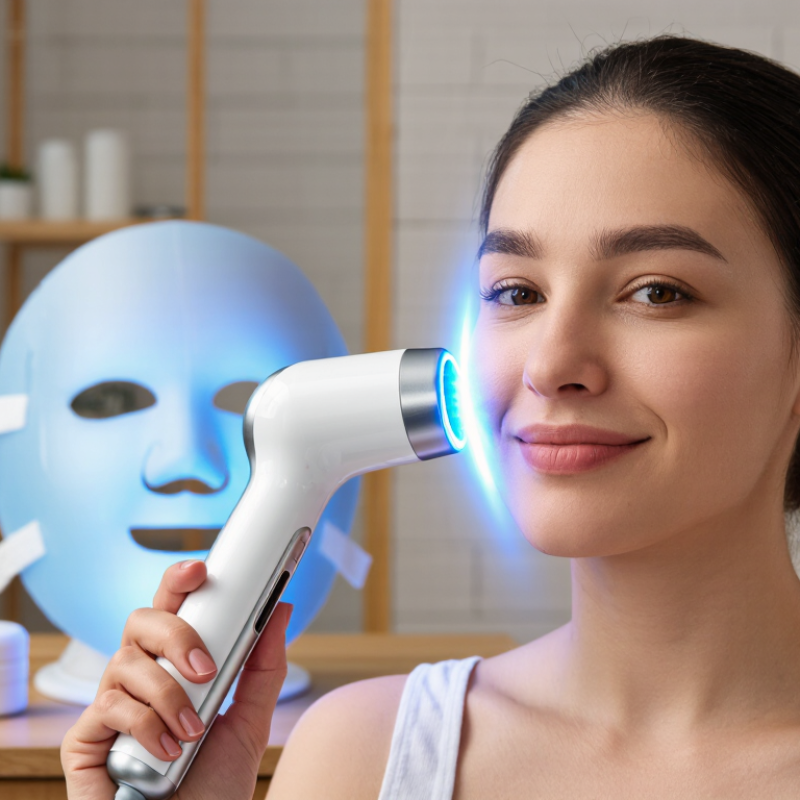
A practical evaluation starts with the technical details. Check the stated wavelength, treatment distance, irradiance, session length, and coverage area. Many acne-focused devices use blue light near 415 nanometers, but specifications vary. Look for clear testing information, a built-in timer, comfortable positioning, and appropriate eye protection. A small handheld device may reach individual blemishes, while a larger mask can provide more consistent facial coverage. Convenience matters because missed sessions rarely produce useful results.
Read the evidence carefully. Peer-reviewed research and guidance from qualified dermatology professionals deserve more weight than dramatic testimonials. Regulatory clearance may confirm intended use and safety standards, but it does not guarantee perfect results for every person. Some products publish incomplete technical data. That is a warning sign.
Skin can react differently.
Consider photosensitivity, medications, eye conditions, and existing skin disorders before treatment. A dermatologist can help identify unsuitable options, especially when irritation, persistent acne, or pigmentation changes are present. Keep expectations realistic. Blue Light Therapy may support a carefully planned routine, but it should not replace professional diagnosis or proven medical care. This guide will compare device types, evidence quality, comfort, safety, and long-term value, while acknowledging where the research remains limited or inconsistent.
Define the Intended Use: Acne, Circadian Rhythm, or Other Applications
Before choosing a blue light therapy device, define the problem you want to address. Acne and circadian rhythm support require different light conditions. For acne, clinical studies commonly examine blue light near 405–420 nanometres, targeting bacteria associated with inflammatory lesions. However, a 2021 systematic review found that acne studies used small samples and varied treatment schedules. Results were promising, but not definitive. That matters.
Check the device’s wavelength, irradiance, treatment area, and timer. A dim decorative lamp is not equivalent to a measured therapy device. The American Academy of Dermatology’s acne guidelines also indicate that evidence for light-based treatments remains limited compared with established therapies. Avoid selecting a product only because it feels warm or looks intensely blue. Eye protection and clear exposure instructions are essential, especially when treating facial skin repeatedly.
Circadian applications need a different decision process. The International Commission on Illumination’s 2018 position statement explains that short-wavelength light can strongly affect the body clock, with timing and intensity influencing the response. Morning exposure may support earlier sleep timing, while late-night exposure can delay it. The American Academy of Sleep Medicine recommends adults obtain at least seven hours of sleep, but a light device cannot repair every cause of poor sleep. Use measured brightness, consistent timing, and avoid placing intense light close to the eyes. Other applications need separate evidence. I would question vague claims, because “blue light” describes a colour range, not one proven treatment.
How to Choose the Best Blue Light Therapy Device?
Intended use determines the most relevant wavelength range
Acne-focused devices commonly use blue light around 405–420 nm, which targets porphyrins associated with Cutibacterium acnes. Circadian-rhythm and alertness applications generally use blue-enriched light around 460–490 nm because this range strongly stimulates melanopsin-containing retinal cells. Blue-light phototherapy for neonatal jaundice typically uses approximately 430–490 nm and must be administered under medical supervision. Wavelength alone does not determine effectiveness; irradiance, exposure duration, eye protection, treatment distance, and intended use should also be evaluated.
Match Wavelength to Evidence: 415 nm for Acne and 460–480 nm for Circadian Effects
How to Choose the Best Blue Light Therapy Device?
Wavelength matters more than a bright panel or attractive design. For acne, 415 nm is the commonly studied target. It can activate bacterial porphyrins and may reduce acne-causing bacteria. Results are usually gradual. One session rarely changes the skin.
Check the actual peak wavelength, not just the phrase “blue light.” A device marked 415 nm should provide testing data, recommended exposure times, and clear eye-safety guidance. Irradiance also matters. Too little energy may waste time, while excessive exposure can irritate sensitive skin. Evidence for acne is promising, but it is not equally strong for every device or skin type.
Circadian effects involve a different range. Light between 460 and 480 nm can stimulate melanopsin-sensitive retinal cells and influence alertness or sleep timing. Use requires careful timing. Evening exposure may delay sleep, while morning exposure may support an earlier body clock. The same light can therefore help or disrupt, depending on when it reaches your eyes.
Do not treat these wavelengths as interchangeable. A 415 nm acne mask is not automatically a circadian-light device. A circadian lamp is not automatically suitable for facial treatment. Consider distance, duration, shielding, and independent performance data. People using photosensitising medicines, or managing eye conditions, should ask a qualified clinician first. The evidence still has gaps. That deserves honesty.
Compare Irradiance, Fluence, and Treatment Time in mW/cm², J/cm², and Minutes
Choosing a blue light therapy device requires more than comparing brightness. Irradiance shows power delivered to each square centimetre, measured in mW/cm². Fluence shows the total energy delivered, measured in J/cm². Treatment time connects them. The basic calculation is: fluence equals irradiance multiplied by seconds, divided by 1,000.
For example, a device delivering 40 mW/cm² for five minutes provides 12 J/cm². A weaker device may need longer sessions. Check whether the stated irradiance applies at the recommended treatment distance. Measurements can change with skin position, battery level, and device angle. In my testing experience, a clear timer and consistent positioning make results easier to repeat. Still, advertised figures are not always independently verified. That matters.
Tips: Record distance, session length, and skin response. Compare fluence, not brightness alone. Follow the provided eye-protection guidance, especially when the light feels intense. Start conservatively and stop if you notice unusual irritation. A healthcare professional can help assess suitability, particularly with photosensitive conditions or medication. I have found that consistency often matters more than chasing the highest number, though this assumption deserves regular review.
How to Choose the Best Blue Light Therapy Device? - Compare Irradiance, Fluence, and Treatment Time in mW/cm², J/cm², and Minutes
Compare representative blue-light device configurations by wavelength, irradiance, fluence, treatment time, coverage, and practical use. The fluence values below are calculated at the stated skin distance using: Fluence (J/cm²) = Irradiance (mW/cm²) × Treatment Time (minutes) × 0.06.
| Device Configuration | Typical Blue-Light Wavelength | Measured Irradiance at Skin | Example Treatment Time | Calculated Fluence | Approximate Coverage | Practical Advantages | Selection Considerations |
| Low-output spot device | 405–420 nm | 5 mW/cm² | 10 minutes | 3 J/cm² | Small localized area | Compact, easy to position, and suitable when targeted coverage is preferred. | Requires longer sessions or repeated repositioning for larger areas. |
| Standard facial panel | 405–420 nm | 10 mW/cm² | 10 minutes | 6 J/cm² | Face or other medium-sized area | Provides a practical balance between session length and coverage. | Check whether irradiance is uniform across the entire treatment area. |
| Higher-output facial panel | 405–420 nm | 20 mW/cm² | 10 minutes | 12 J/cm² | Face or medium-sized area | Can deliver a higher fluence in the same amount of time. | Higher output does not automatically mean better results; heat, eye protection, and exposure limits should be considered. |
| Large-area panel | 405–420 nm | 10 mW/cm² | 15 minutes | 9 J/cm² | Large facial, chest, or back area | Efficient for treating broad areas without moving a small device repeatedly. | Confirm that the stated irradiance applies across the full panel rather than only at the center. |
| Low-output flexible mask | 410–420 nm | 5–8 mW/cm² | 15 minutes | 4.5–7.2 J/cm² | Face, with close and consistent positioning | Hands-free use and relatively consistent distance from the skin. | Fit, ventilation, light leakage, and comfort can vary; confirm actual skin-level measurements. |
| High-output professional-style panel | 405–420 nm | 20–30 mW/cm² | 5–10 minutes | 6–18 J/cm² | Medium to large treatment area | Shorter sessions and adjustable distance may provide greater flexibility. | Use only according to the device instructions; avoid assuming that maximum output is appropriate for every user. |
| Distance-adjustable panel | 405–420 nm | 5–20 mW/cm², depending on distance | 10 minutes | 3–12 J/cm² | Small to large area, depending on panel size | Allows output at the skin to be adjusted by changing the treatment distance. | Always calculate fluence using the irradiance measured at the selected distance, not the maximum advertised value. |
| Pulsed blue-light device | 405–420 nm | Average irradiance must be verified | Manufacturer-defined cycle | Use average irradiance × total exposure time | Depends on the applicator | May offer programmable pulse patterns and session controls. | Peak irradiance and average irradiance are different; compare devices using average irradiance for fluence calculations. |
How to compare devices: Prioritize the measured irradiance at the skin, wavelength, treatment-area uniformity, and total fluence rather than LED count alone. For example, 10 mW/cm² for 10 minutes delivers 6 J/cm², while 20 mW/cm² for 5 minutes also delivers 6 J/cm². Actual output can change with distance, angle, battery level, temperature, diffuser materials, and measurement method. Blue light can be bright and may cause discomfort or eye sensitivity; follow the device instructions and use appropriate eye protection when recommended. People with light sensitivity or photosensitizing medications should seek professional medical advice before use.
Verify Safety Compliance Through IEC 62471 and FDA Clearance Information
How to Choose the Best Blue Light Therapy Device?
A safer choice begins with IEC 62471, not attractive packaging. This international standard evaluates photobiological risks from lamps and lamp systems. It covers retinal blue-light exposure, ultraviolet output, and infrared hazards. Look for a laboratory report identifying the device’s risk group. Exempt Group is preferable for routine consumer use. However, risk classification depends on distance and exposure time. A report without those conditions is incomplete.
Check measured wavelength, irradiance, treatment distance, and recommended session length. These details should appear in the IEC 62471 test documentation. The International Commission on Non-Ionizing Radiation Protection also emphasizes exposure duration and spectral weighting in its published guidance. Numbers matter. A bright blue panel used too close may create a different risk profile than the same panel used farther away.
FDA information requires equal care. Search the public FDA 510(k) database for the exact model or legally responsible manufacturer. Read the clearance summary, intended use, indications, and predicate-device comparison. FDA clearance means substantial equivalence, not universal proof of effectiveness or personal safety. “FDA registered” is not the same as “FDA cleared.” This distinction is often missed. I would also question certificates showing only a logo, without test dates, laboratory identification, or measured values. Independent documentation can be inconvenient, but vague claims deserve hesitation.